

T-120m
- 2×Burratano balsamic
- 1×Sourdough
Take the order at the table, the counter or the kerb, and get it to the kitchen.
Example data
One system, five pillars
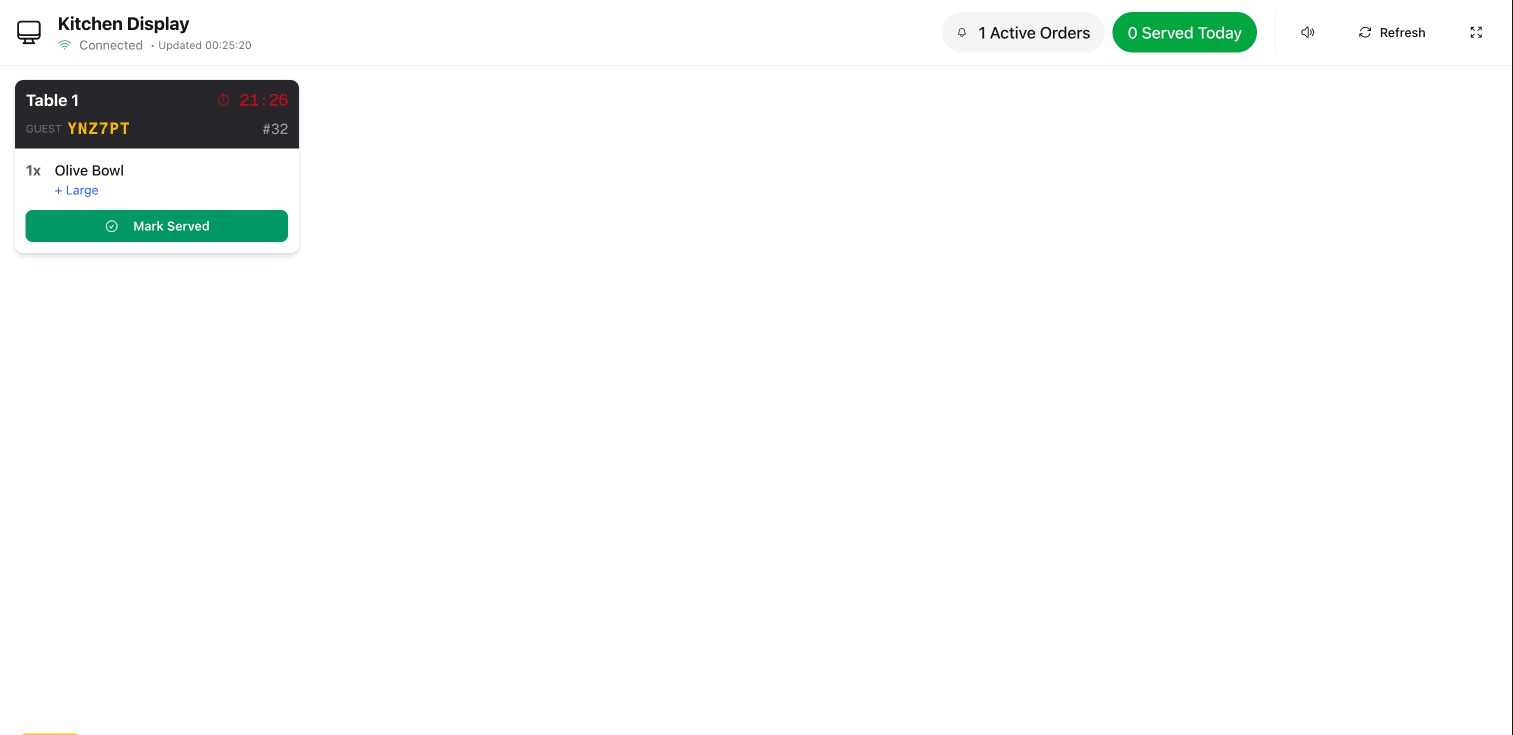
Kitchen display is part of ordering.
Take the order at the table, the counter or the kerb, and get it to the kitchen. It runs on the same menu, the same tables and the same bill as everything else here — nothing to integrate, nothing to reconcile.
Know what sold, what almost sold, and what caused the difference.
Dish reviews · Revenue & attribution · Analytics · AI insights · Guest intelligence · Automated messaging · Experiments · Discounts & promotions · Campaigns
Fill the diary — and give a forgotten table a chance to be sold again.
Bookings & events
Cost the menu on what you are actually paying for the food.
Stock & purchase orders
Compare what you ordered, what arrived, and what you were billed for.
Supplier control
Build the rota, publish it once, and know who did what on the floor.
Team & shifts